
When it comes to building a successful email marketing strategy in Klaviyo (or any platform), there are two core building blocks you need to understand: lists and segments. While they may sound similar, they serve very different purposes—and knowing how to use them correctly is the difference between a healthy, high-performing program and one that struggles with poor deliverability and low engagement.
Think of it like this:
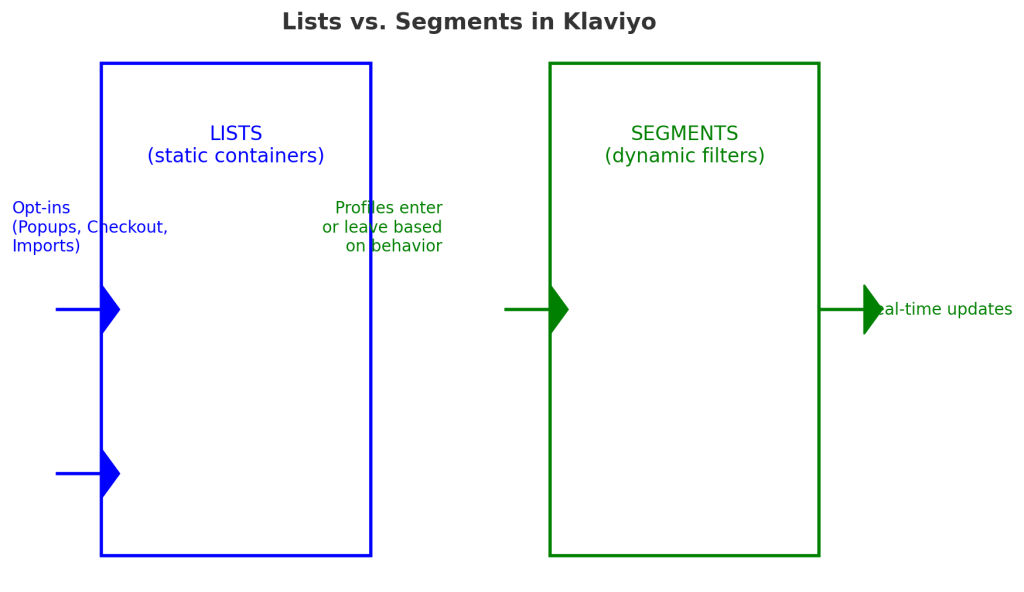
- Lists are containers. Once someone goes into a container, they stay there until you take them out.
- Segments are filters. They automatically sort people in and out based on rules you’ve defined.
Let’s break that down.
What Are Lists?
Lists are static groups of subscribers. Once someone is added to a list, they stay there unless you manually remove them. That’s why lists are best for organizing opt-ins and triggering welcome flows.
Why Lists Matter
There are two main reasons you need to manage lists carefully:
- Tracking Growth Sources
You should always have one primary email list and one primary SMS list for all your organic opt-ins—these are people signing up through your website’s pop-up forms or during checkout. Beyond that, create separate lists whenever you import subscribers from a different source. This allows you to track exactly where your subscribers are coming from, giving you clear insights into how your database is growing. - Triggering the Right Welcome Flow
When someone joins a list, that action usually triggers a welcome flow or nurture series. This is your chance to make a strong first impression—so the message needs to match the way they signed up. For example, if someone entered a giveaway on Instagram, the first email they receive shouldn’t be a “10% off your first order” message. Instead, it should acknowledge the giveaway, build excitement, and introduce them to your brand in the right context.
So remember: lists are like containers for new opt-ins—clean, simple, and static.
What Are Segments?
Segments, on the other hand, are dynamic groups of subscribers. They constantly update in real time based on the criteria you set. A profile may enter or leave a segment at any moment, depending on their behavior, engagement, or attributes.
Think of segments as filters: you define the rules, and Klaviyo automatically filters people in and out as their behavior changes.
Why Segments Matter
Segments are essential for campaign sending. Instead of sending your subscribers the same messages, you deliver personalized messages to specific groups of subscribers that share common characteristics or interests. Unlike lists, they’re designed to reflect current behavior and keep your deliverability strong. Here’s why:
- Protect Your Sender Reputation
Sending campaigns to your entire list is one of the fastest ways to damage deliverability. Many subscribers on your list may no longer be engaged, and every unopened email signals to inbox providers (like Gmail or Outlook) that your messages aren’t wanted. Segmentation solves this problem by letting you filter for engaged subscribers who actually want to hear from you. - Personalize at Scale
Because segments can be based on almost any data point—purchase history, engagement with emails or SMS, browsing behavior—they’re the key to tailoring your campaigns. Whether you want to re-engage lapsed customers, upsell recent buyers, or nurture prospects, segments make it possible.
Leave a Reply