Email marketing can be one of the most profitable channels for any business—but only if you protect your sender reputation. One of the fastest ways to ruin that reputation is by falling into spam traps.
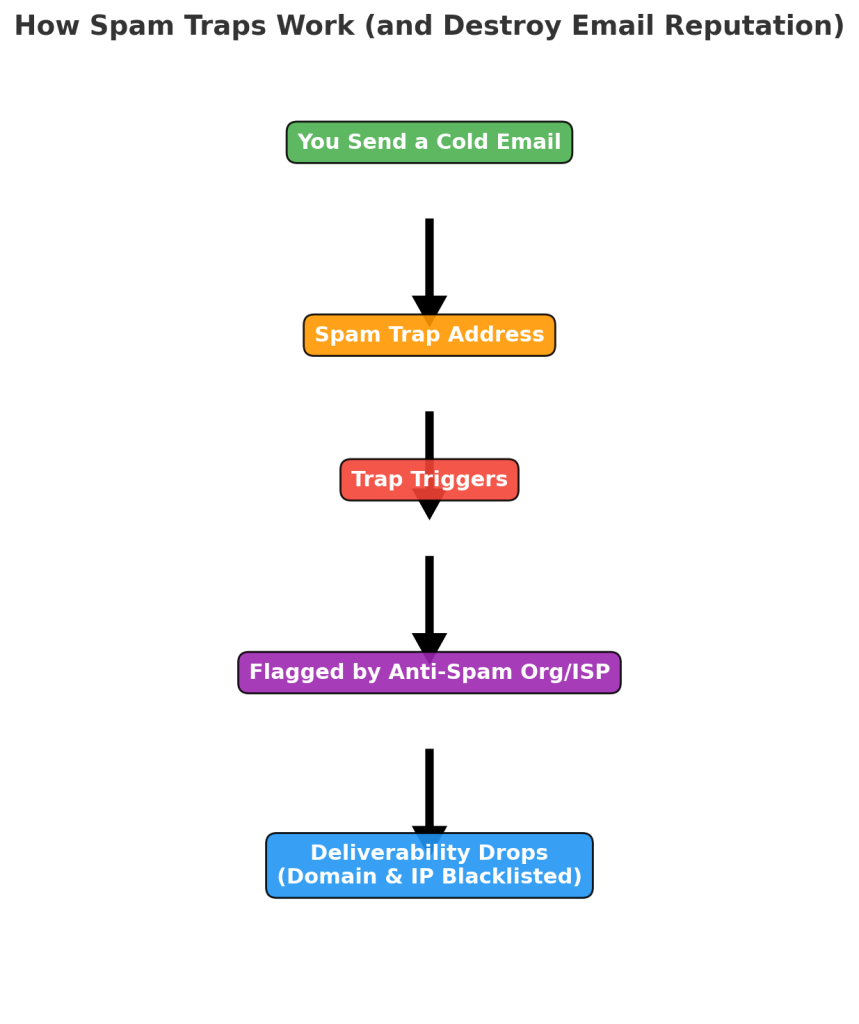
If you’ve ever thought about sending cold emails, scraping emails from LinkedIn, or buying lists, think again. You might be walking straight into a trap designed to mark you as a spammer. Once you hit a spam trap, your domain and IP reputation can plummet overnight—and recovering from that can take months.
Let’s break down what spam traps are, why they exist, how they work, and—most importantly—how to avoid them.
What Exactly Is a Spam Trap?
A spam trap is an email address created and monitored by anti-spam organizations, ISPs (like Gmail or Outlook), or even competitors to catch businesses that send unsolicited or non-permission-based emails.
- Some traps are set up with fake LinkedIn profiles that look legitimate. You scrape the contact details, send a cold email, and instantly your domain is flagged.
- Others come from fake websites built to look like real companies. You find the “contact us” email, send your pitch, and—again—you’ve hit a trap.
- There are also recycled spam traps—old, abandoned email addresses that no longer belong to a real person but are reactivated by anti-spam groups to catch bulk senders who don’t maintain clean lists.
Once your email hits a trap, the provider doesn’t just ignore you—it reports you. Google, Microsoft, Yahoo, and others see your sending behavior as spammy, and you get punished with poor deliverability.
Why Do Spam Traps Exist?
Simply put: to protect consumers from unsolicited and low-quality emails.
Inbox providers want to create a great experience for their users. Spam traps are their way of identifying senders who:
- buy or scrape email lists.
- send emails without consent.
- neglect list hygiene and keep inactive addresses.
If you’re flagged as a spammer, inbox providers push your emails to spam—or block them completely.
The Impact of Hitting a Spam Trap
Getting caught by a spam trap can destroy your sender reputation. The consequences include:
- Deliverability drops – even engaged subscribers stop seeing your emails in their inbox.
- Domain/IP blacklisting – once you’re on a blacklist, your emails may not be delivered at all.
- Lost revenue – fewer emails in inboxes means fewer clicks, conversions, and sales.
- Long recovery time – it can take months of effort (and sending restrictions) to repair a damaged reputation.
How Businesses Accidentally Fall Into Spam Traps
Many business owners fall into spam traps without realizing it:
- Scraping LinkedIn or directories
→ That “Marketing Manager” profile you scraped? It might be an anti-spam organization posing as a person. - Cold emailing random company addresses
→ That “Contact Us” email might not belong to a real company at all. It could be a trap waiting for unsolicited emails. - Neglecting list hygiene
→ Sending emails to old, inactive contacts is risky. Some of those addresses may have been converted into traps. - Buying email lists
→ Purchased lists are notorious for being filled with spam traps—an almost guaranteed way to ruin your deliverability.
How to Avoid Spam Traps
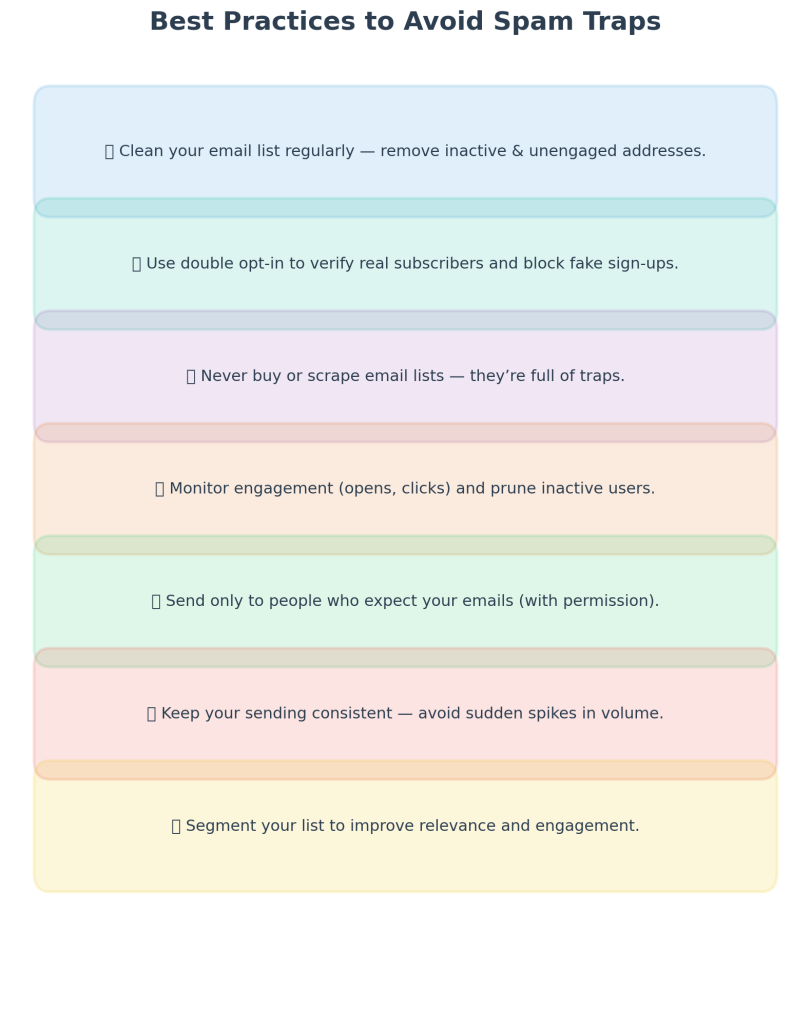
The good news? With the right practices, you can steer clear of traps and protect your sender reputation.
1. Clean your list regularly
Remove inactive subscribers who haven’t opened or clicked your emails in 60–90 days. Keep your list lean and engaged.
2. Use double opt-in
Double opt-in requires new subscribers to confirm their email before being added to your list. This ensures every address is valid—and keeps malicious competitors from adding traps to your newsletter.
3. Never buy or scrape lists
If you didn’t earn the email through sign-up, don’t use it. Purchased or scraped lists are the #1 way businesses get caught. Tools like ZeroBounce or NeverBounce can help identify risky emails.
4. Monitor engagement metrics
Inbox providers look at open rates, click rates, and spam complaints. If engagement drops, prune your list before traps start flagging you.
5. Send only to people who want your emails
This is the ultimate rule of email marketing: permission first. Always.
Final Thoughts
Spam traps are not random accidents—they are carefully designed to catch brands that don’t respect email best practices. Once you’re caught, your domain and IP reputation can collapse overnight.
The safest path is simple:
- Build your list organically.
- Use double opt-in.
- Keep your lists clean.
- Send only to people who actually want your emails.
Cold outreach may seem like a shortcut, but it’s not worth the risk. Email is too valuable a channel to lose by ste
Leave a Reply